@article{watson_ge_incidence:2026,
    Author = {Watson, C. Luke},
    Title = {Is the NIT Better Than the EITC? Targeted Transfers in General Equilibrium},
    Journal = {Manuscript},
Year = {2026}Is the NIT Better Than the EITC? Targeted Transfers in General Equilibrium
Incidence
General Equilibrium
EITC
GE Incidence of Labor Transfers
PDF links
Abstract
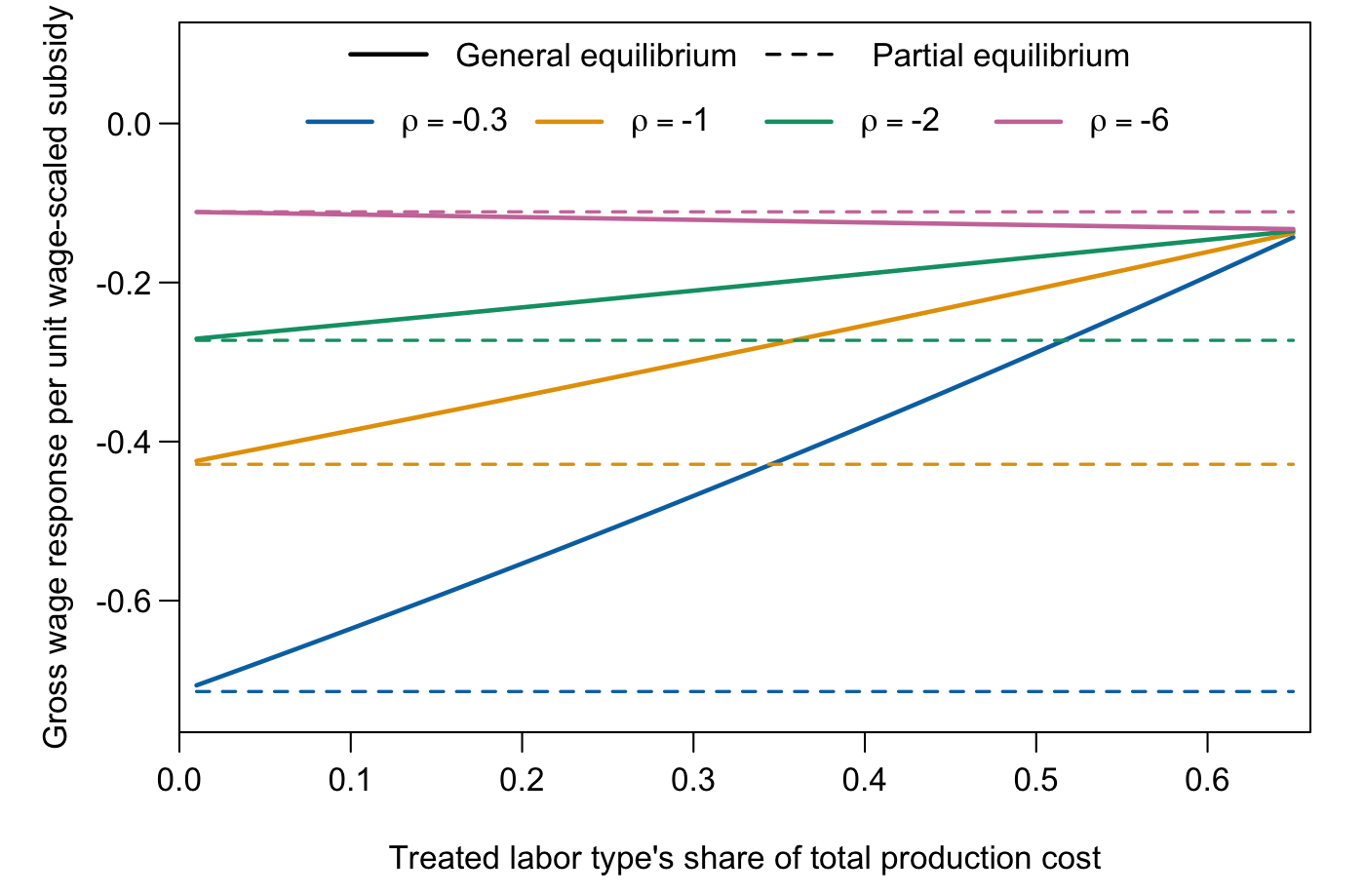
A targeted labor subsidy meant to raise employment can unintentionally lower recipients’ wages. I derive incidence with imperfectly substitutable labor and capital supply. Measurable elasticities, cost shares, and policy shocks are sufficient statistics. Factor-price incidence extends beyond recipients to capital owners and untargeted workers; with free entry, it becomes a redistribution among workers. I apply the model to a 1992 Earned Income Tax Credit (EITC) expansion and an equal-cost negative income tax (NIT). At baseline, the NIT delivers more net transfers to women; the EITC yields more disposable income and a higher marginal value of public funds, 1.04 versus 0.89.